1. Who? (Target Group)
Primary: Pre-school (Vorschule) to Grade 1.
Secondary: Anxious children or those with motor delays.
Group Size: Entire class (free exploration phase).
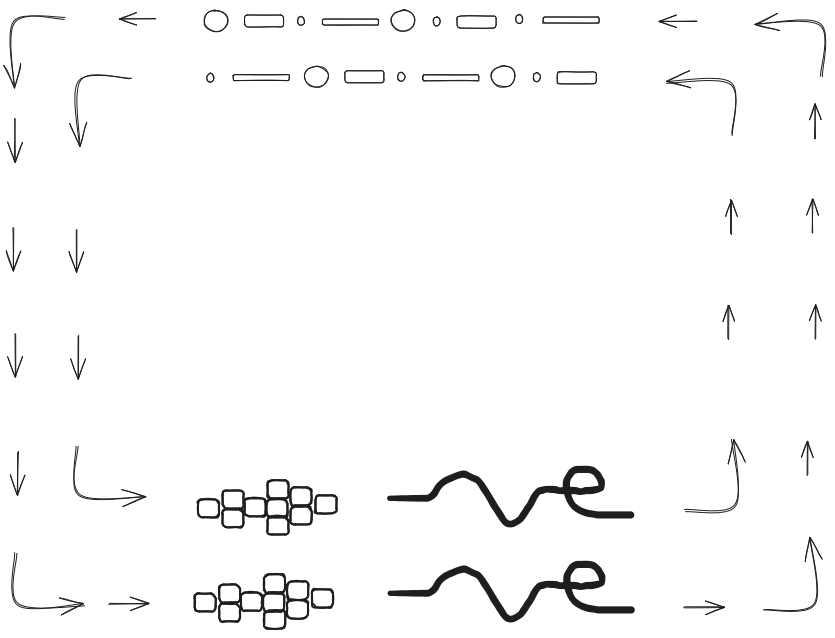
This circuit is the entry point into the “Kinder in Bewegung” world. It is designed to be inviting, safe, and playful, actively reducing fear of failure or falling. The equipment is kept close to the ground to build initial confidence.
1. Who? (Target Group)
Primary: Pre-school (Vorschule) to Grade 1.
Secondary: Anxious children or those with motor delays.
Group Size: Entire class (free exploration phase).
2. What? (Activity)
A “floor-is-lava” style adventure where children navigate simple, low-height obstacles.
3. Where? (Location)
Gymnasium: Soft mats are essential.
Classroom: Possible if furniture is pushed aside.
4. When? (Timing)
Phase: Week 1 of the program.
Duration: 20-30 minutes (Playful exploration).
5. Why? (Objective)
To overcome “Movement Anxiety”. By proving they can balance on simple objects, children unlock the willingness to try harder tasks later.
6. How? (Methodology)
Storytelling Mode: Wrap the circuit in a story (e.g., “Crossing the Jungle”).
Rule: “Use your arms like airplane wings for balance.”
7. Which? (Resources)
Equipment: Floor Tape (Lines), Flat Balance Pads, Low Gym Benches (wide side up), Scarves.
A gentle flow designed to mimic natural terrain.
The Tightrope (Tape Line)
A line of colored tape on the floor.
Challenge: Walk one foot in front of the other (tandem) without stepping off the line.
Skill: Visual focus and foot placement accuracy.
The Marshmallow Path (Soft Pads)
Scatter soft Balance Pads or cushions.
Challenge: Step from pad to pad. The surface gives way, requiring ankle stabilization.
Skill: Ankle strength and adapting to changing surfaces.
The Log Bridge (Inverted Bench)
A standard gym bench turned upside down (wider balance beam) or right-side up for absolute beginners.
Challenge: Walk across slowly.
Variation: Walk sideways like a crab.
Skill: Basic static balance.
The Animal Crawl (Mat)
A specialized mat area.
Challenge: Bear walk (hands and feet) or Crab walk (hands and feet, belly up).
Skill: Core activation and cross-lateral coordination (hand-leg connection).
Even these simple movements lay critical neural foundations.
The Science: The feet are rich in nerve endings. Walking on different textures (hard floor, soft pad, wooden beam) stimulates the somatosensory cortex.
Improvement: Children learn to “feel” the ground. This sensitivity helps them adjust their posture unconsciously, leading to less fidgeting in chairs as they become more comfortable in their bodies.
The Science: The amygdala protects us from danger (like falling). In anxious children, this is overactive.
Improvement: By successfully navigating safe, low obstacles (Parcours 0), the brain learns “I am safe even when slightly unstable.” This down-regulates the stress response, allowing the child to be more open to learning new things in all subjects.
The Science: The brain builds a coordinate system of the room (Hippocampus/Entorhinal cortex).
Improvement: Navigating strictly defined paths (tape lines, specific pads) teaches the child to map their movement to the environment. This spatial mapping is the same cognitive skill used to map numbers on a number line or letters on a page.
The Science: Praxis is the ability to conceive, plan, and execute a movement.
Improvement: “Bear walking” requires planning where to put hands and feet to avoid falling. Practicing these novel movements helps children who are often described as “clumsy” to become more graceful and organized in their daily actions.
Discover our transformative educational programs that build lasting skills and confidence.